HTTP Status Codes
HTTP 101 Switching Protocols
Switching Protocols — the server is switching to the protocol requested by the client
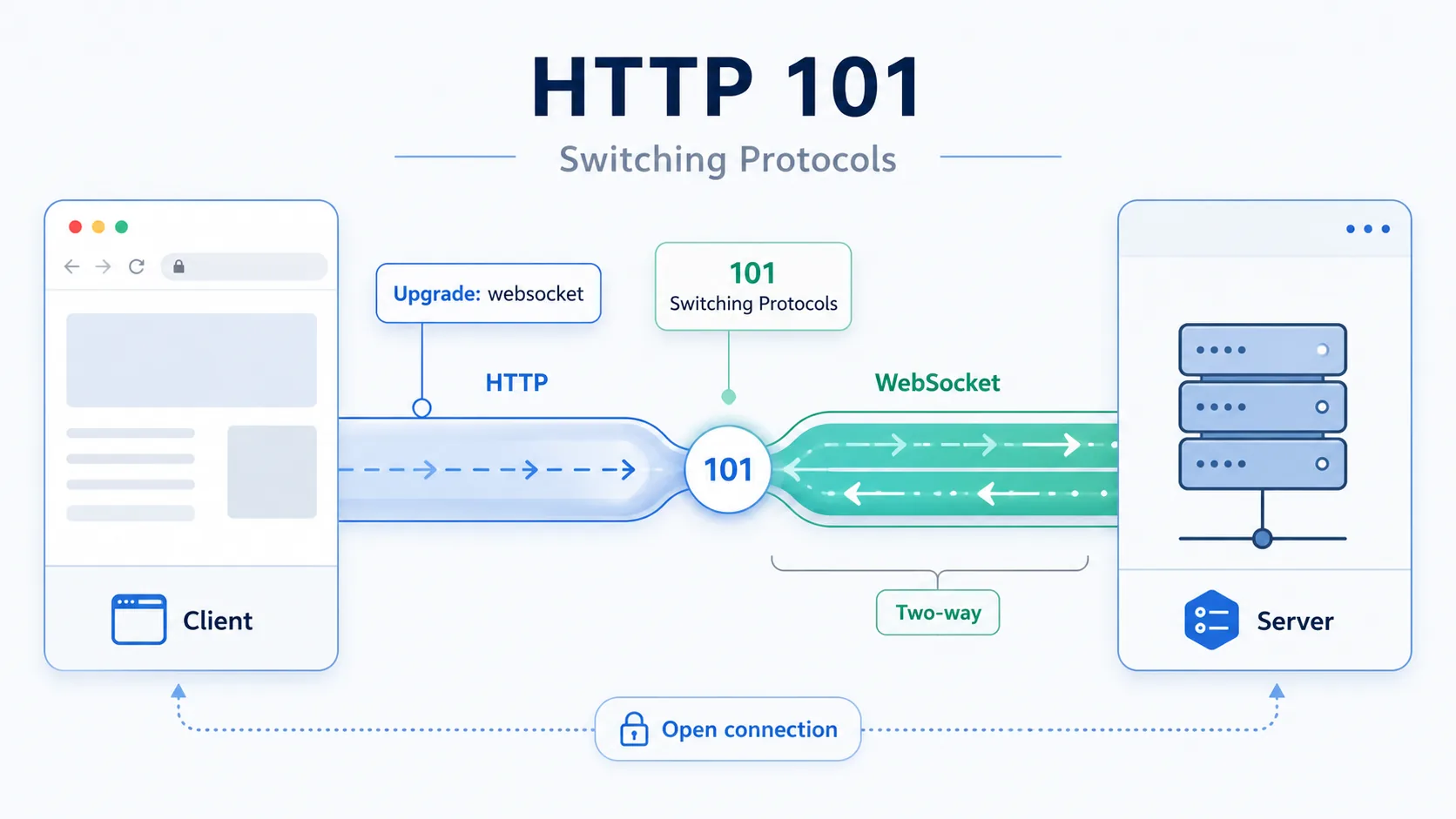
A 101 Switching Protocols response is sent in reply to an Upgrade request header from the client. The server indicates which protocol it is switching to, allowing for real-time, bidirectional communication.
Visual summary
A quick reference view of how HTTP 101 works: An active connection upgrading or changing its communication format.
What 101 Means
The shortest useful reading of this status code.
Switching Protocols means the server is switching to the protocol requested by the client.
This status falls into the 1xx class, indicating a informational outcome for the request.
Quick read
Switching Protocols
the server is switching to the protocol requested by the client
Technical Context
How this status behaves without turning the page into a repair guide.
Standard usage
The 101 status is sent in response to an 'Upgrade' request header from the client. It signifies that the server agrees to switch the connection to a different protocol, such as moving from HTTP/1.1 to WebSockets.
Technical nuance
This transition allows for full-duplex communication over a single TCP connection, which is essential for real-time applications like chat systems or live data feeds.
Related HTTP Codes
Nearby HTTP status codes help clarify how 101 differs inside the same response family.
101
Switching Protocols
the server is switching to the protocol requested by the client
100
Continue
server received preliminary request headers and client can transmit body
426
Upgrade Required
the server demands a different protocol before continuing
103
Early Hints
the server is sending preliminary response headers before the final response
Common Causes
Upgrading an HTTP connection to WebSockets
A common condition that triggers a 101 response when the web server evaluates the transaction.
Switching from HTTP/1.1 to HTTP/2
A common condition that triggers a 101 response when the web server evaluates the transaction.
Negotiating a different application-layer protocol via the Upgrade header
A common condition that triggers a 101 response when the web server evaluates the transaction.
Typical Scenarios
A web chat application upgrades its connection to WebSockets for real-time messaging
A browser negotiates a protocol upgrade to a more efficient transport layer
What To Know
Reception of a 101 status confirms the successful upgrade of the communication channel. The connection state thereafter follows the rules of the newly negotiated protocol.
Frequently Asked Questions
Common interpretation questions about HTTP 101.
Yes, it means the server agreed to the protocol upgrade requested by the client and the connection is transitioning.