HTTP Status Codes
HTTP 203 Non-Authoritative Information
Non-Authoritative Information — the response was modified by an intermediate proxy
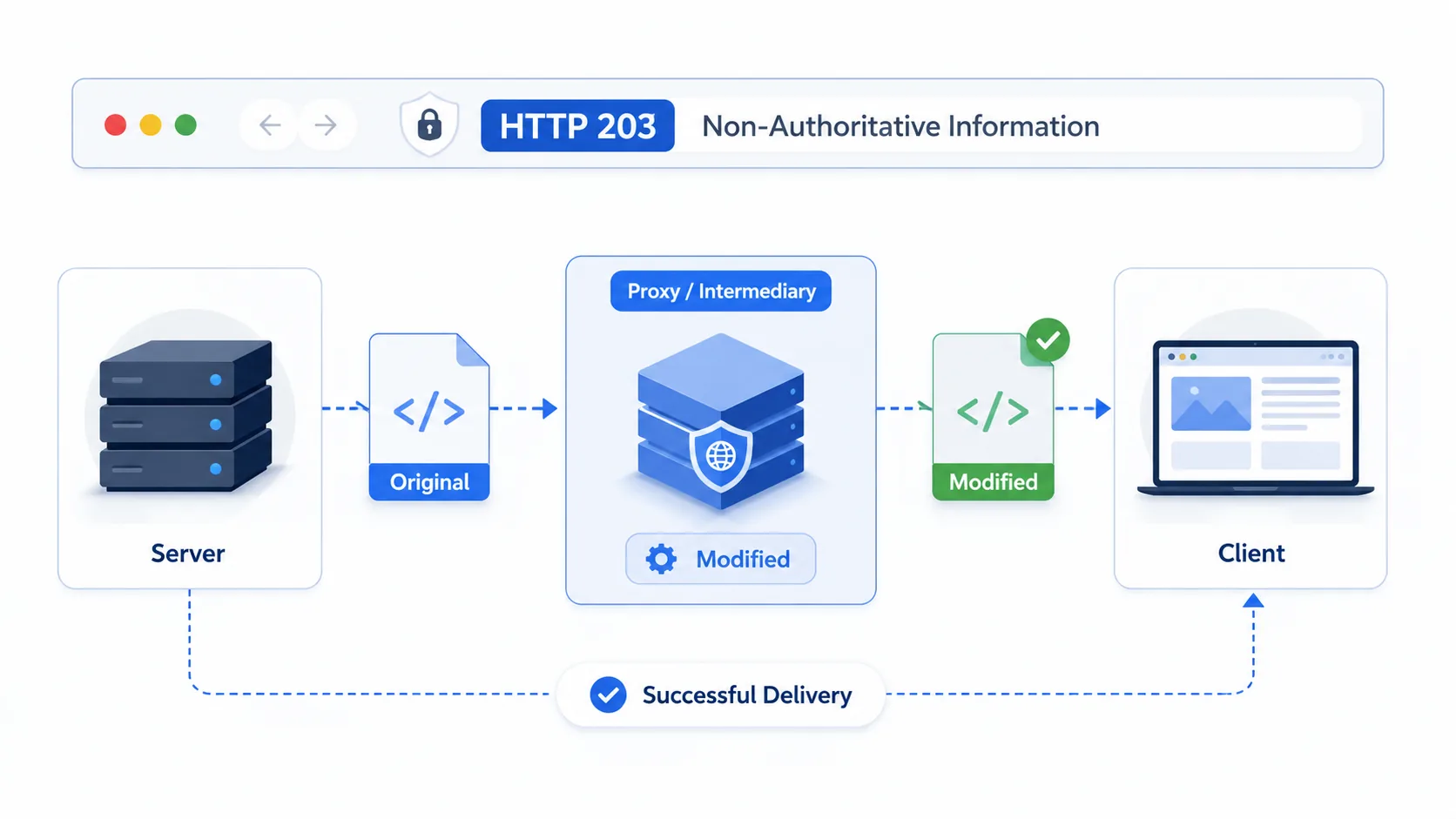
Status 203 signals that the request was successful, but the returned metadata or body may differ from what the origin server originally sent. A proxy or intermediary altered the response before the client received it.
Visual summary
A quick reference view of how HTTP 203 works: A payload passing through an intermediary node and receiving a modification tag.
What 203 Means
The shortest useful reading of this status code.
Non-Authoritative Information means the response was modified by an intermediate proxy.
This status falls into the 2xx class, indicating a successful outcome for the request.
Quick read
Non-Authoritative Information
the response was modified by an intermediate proxy
Technical Context
How this status behaves without turning the page into a repair guide.
Standard usage
The 203 Non-Authoritative Information status indicates that the request was successful, but the enclosed payload has been modified by a transforming proxy from the origin server's original 200 response.
Technical nuance
This code is rarely seen in practice because most proxies do not signal their modifications. When it does appear, it serves as an honesty mechanism: the proxy is transparently disclosing that the response is not exactly what the origin sent.
Related HTTP Codes
Nearby HTTP status codes help clarify how 203 differs inside the same response family.
203
Non-Authoritative Information
the response was modified by an intermediate proxy
200
OK
the request succeeded and the server returned the expected response
204
No Content
the request was successful but there is no content to return
206
HTTP 206 Partial Content
the server is sending a requested range
Common Causes
A transforming proxy rewrote headers or content from the origin server
A common condition that triggers a 203 response when the web server evaluates the transaction.
A CDN or caching layer modified the payload before delivery
A common condition that triggers a 203 response when the web server evaluates the transaction.
A corporate gateway stripped or replaced parts of the response
A common condition that triggers a 203 response when the web server evaluates the transaction.
Typical Scenarios
A corporate network proxy injects a disclaimer header into every outbound response
A caching appliance serves a compressed version of the original page with modified headers
What To Know
A 203 response is functionally successful. The distinction from 200 is primarily informational, alerting the client that an intermediary has altered the payload in transit.
Frequently Asked Questions
Common interpretation questions about HTTP 203.
The content is generally usable, but it may not be identical to what the origin server originally sent. Applications that need byte-exact fidelity should verify against the origin directly.