HTTP Status Codes
HTTP 410 Gone
Gone — the requested resource was intentionally removed and is no longer available
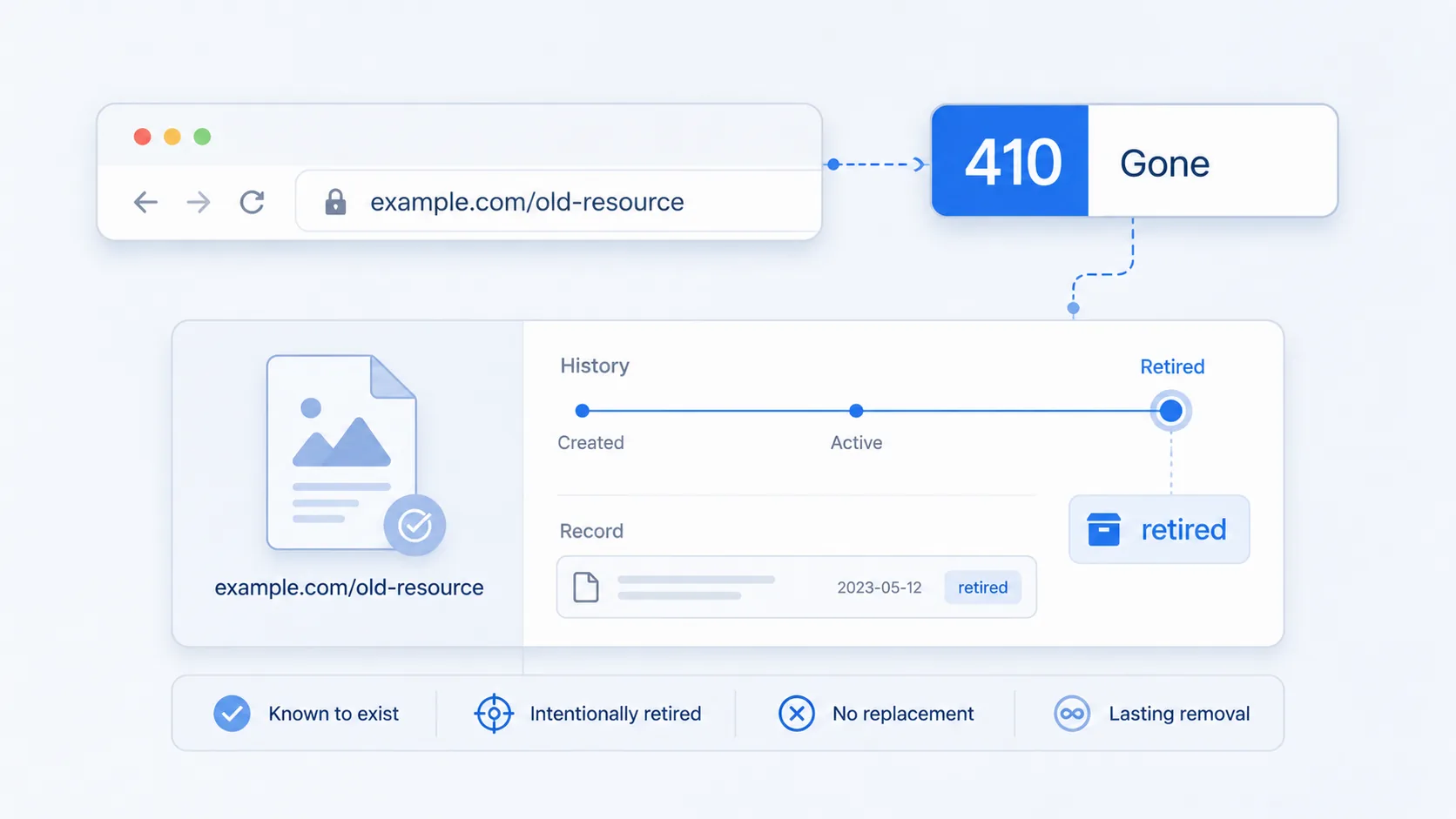
A 410 Gone response says the server knows the resource used to exist and now treats its removal as deliberate and lasting. It is more explicit than 404 because it communicates retirement, not just absence.
Visual summary
A quick reference view of how HTTP 410 marks a resource as deliberately retired rather than merely missing right now.
What 410 Means
The shortest useful reading of this status code.
Gone means the requested resource was intentionally removed and is no longer available.
For retired-resource responses, the key distinction is intent: the server is not merely missing the resource, it is signaling deliberate and lasting removal.
Quick read
Resource retired on purpose
A 410 means the server is signaling deliberate and lasting removal rather than uncertain absence.
How to fix 410
General informational guidance, not professional advice. Commands can affect your system or data — back up first and proceed at your own risk. FixerCode is an independent reference, not affiliated with any vendor mentioned.
Confirm the 410 is intentional
Check the headers for the URL to verify the server is deliberately returning Gone rather than hitting a misconfigured route.
curl -I https://example.com/old-pathRedirect instead if the content moved
If a replacement exists, swap the 410 for a permanent redirect so visitors and link equity reach the new location.
return 301 https://example.com/new-path;Clean up references if it should stay gone
Remove the retired URL from internal links and the sitemap so clients and crawlers stop requesting it.
Let search engines re-crawl
A deliberate 410 drops the URL from the index faster than a 404. Request re-crawling so the retirement is picked up sooner.
Technical Context
How this status behaves without turning the page into a repair guide.
Intentional removal
A 410 is the clearest HTTP signal for a resource that is intentionally gone. The server is not merely failing to find the URL in the moment; it is expressing that the retirement itself is the expected state.
Retirement signal
That makes 410 different from 404. A 404 leaves open the possibility of a missing route, typo, or uncertain history, while a 410 tells clients and crawlers that the resource has been withdrawn on purpose. It is also different from redirect-based retirement, where a server points traffic to a replacement URL instead of closing the path entirely.
Indexing contrast
In practice, 410 appears around content lifecycle decisions, deprecations, cleanup projects, and compliance-driven removals where the operator wants the removal signal to be explicit rather than ambiguous.
Related HTTP Codes
Nearby HTTP status codes help clarify how 410 differs inside the same response family.
410
Gone
the requested resource was intentionally removed and is no longer available
404
Not Found
the server cannot find the requested resource at this URL
403
Forbidden
the server understood the request but refuses to authorize it
451
Unavailable For Legal Reasons
the server legally cannot serve the resource
Common Causes
Page retired without a replacement URL
The content lifecycle ended, and there is no successor page or endpoint for this address.
Deprecated API endpoint permanently withdrawn
The integration target existed before, but the service now treats that endpoint as retired.
File or document removed after a policy decision
The server is deliberately signaling that the resource should no longer be expected to return.
Legacy route intentionally shut down after a migration window
The old path stays retired so clients and crawlers stop treating it as a temporary gap.
Typical Scenarios
An old API path is retired after consumers were given time to migrate elsewhere
A page is intentionally removed with no successor URL after a content cleanup
A file is withdrawn because a policy, legal, or licensing decision made it unavailable
What To Know
A 410 is usually stable for the affected URL because the server is deliberately publishing a retirement state. When many URLs shift to 410 together, the broader pattern often reflects a migration cutoff, archive cleanup, or policy-driven removal event.
Frequently Asked Questions
Common interpretation questions about HTTP 410.
A 410 is more explicit. It tells clients that the resource is not just missing right now but intentionally retired and not expected to come back.
No. A 410 only says the old resource is gone. If a direct replacement existed, many sites would choose a redirect instead of a retirement response.
Yes. It fits pages, files, or API endpoints that previously existed but have now been withdrawn intentionally as part of a content or product lifecycle decision.